2600 Meeting
On the same street as the building where we lived in Canada, there was a bookstore specializing in comics and cyberpunk called Nebula Books. It was our playground — the place where we spent all our allowance. There we found comic books, graphic novels, and books that never showed up in Brazilian bookstores, along with a few events.
It was at that bookstore that I discovered Mondo 2000, an experimental cyberculture publication. They tried to bring the idea of hypertext to paper: some words in the middle of the text appeared highlighted and led to little boxes in the margin with explanations, comments, or related excerpts. It was different, strange, fun, and totally new for us, who were still trying to figure out what hypertext even was on the computer.
One day, the bookstore hosted an event with Neil Gaiman. He was already famous for the Sandman comics and signed one of my copies of Mondo 2000. I also discovered the books of William Gibson there, one of the authors who helped define cyberpunk. And alongside all that, we started reading The Lord of the Rings and the Hitchhiker’s Guide to the Galaxy, which we borrowed from the library because it was cheaper than buying them.
Another magazine we found in Canada was 2600: one of the most famous hacker magazines in the world. We already knew about it, but it was almost impossible to find copies in Brazil. In Canada, it was cheap and easy to get. We bought several issues and brought them all back to Brazil. Then all our friends wanted to borrow them.
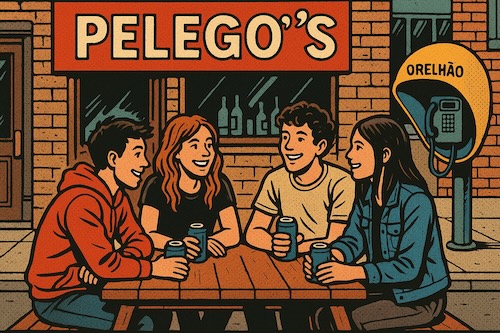
After returning to Brazil, life went back to its routine: afternoon classes and then a beer with friends. One of the places where we’d meet was the bar at the UFMG Employees’ Association, which was on campus and cheap. Every once in a while they held bingo games and we’d even play (though some friends had the habit of yelling “bingo!” without having really won, irritating the organizers). On one of those afternoons, talking about 2600, we remembered the section of the magazine dedicated to the 2600 Meetings. We decided to create our own: we scheduled the 2600 Meeting right there at the UFMG employees’ bar. And that meeting was even listed on the 2600 meetings page as the only meeting in Brazil. It stayed there for roughly twenty-five years, until the page was changed in 2020, during the COVID pandemic, to suspend all meetings. That was when our meeting disappeared from the list.
At that time, another craze took over the department: IRC (Internet Relay Chat). It was an old chat system, but it already had rooms and channels. People spent hours there. My brother became a big fan and went so far as to write his own IRC client, called girirc. The best part was the software’s license: the Girino anarchist license.
Two friends of mine, Galdino and Meshunior, worked on one of the department’s partnerships, managing the point of presence for the Rede Internet Minas project. I’d hang out in their office, chatting and learning about networks, watching the day-to-day life of the admins who kept services running. It all fascinated me. Looking back, maybe it was an important influence on future decisions in my career. But that’s a story for another chapter.